How much does a pergola cost in Texas?
A professionally installed pergola in the Dallas-Fort Worth area typically runs $5,000 to $9,000 for a standard 10×12 structure, or roughly $30 to $60 per square foot depending on material. Cedar runs $35-$40/sq ft while Douglas Fir is about $30-$35 — with the final price also shaped by roof style (open lattice vs. commercial polycarbonate), electrical, and lighting add-ons.
Pergola vs. patio cover — which is better?
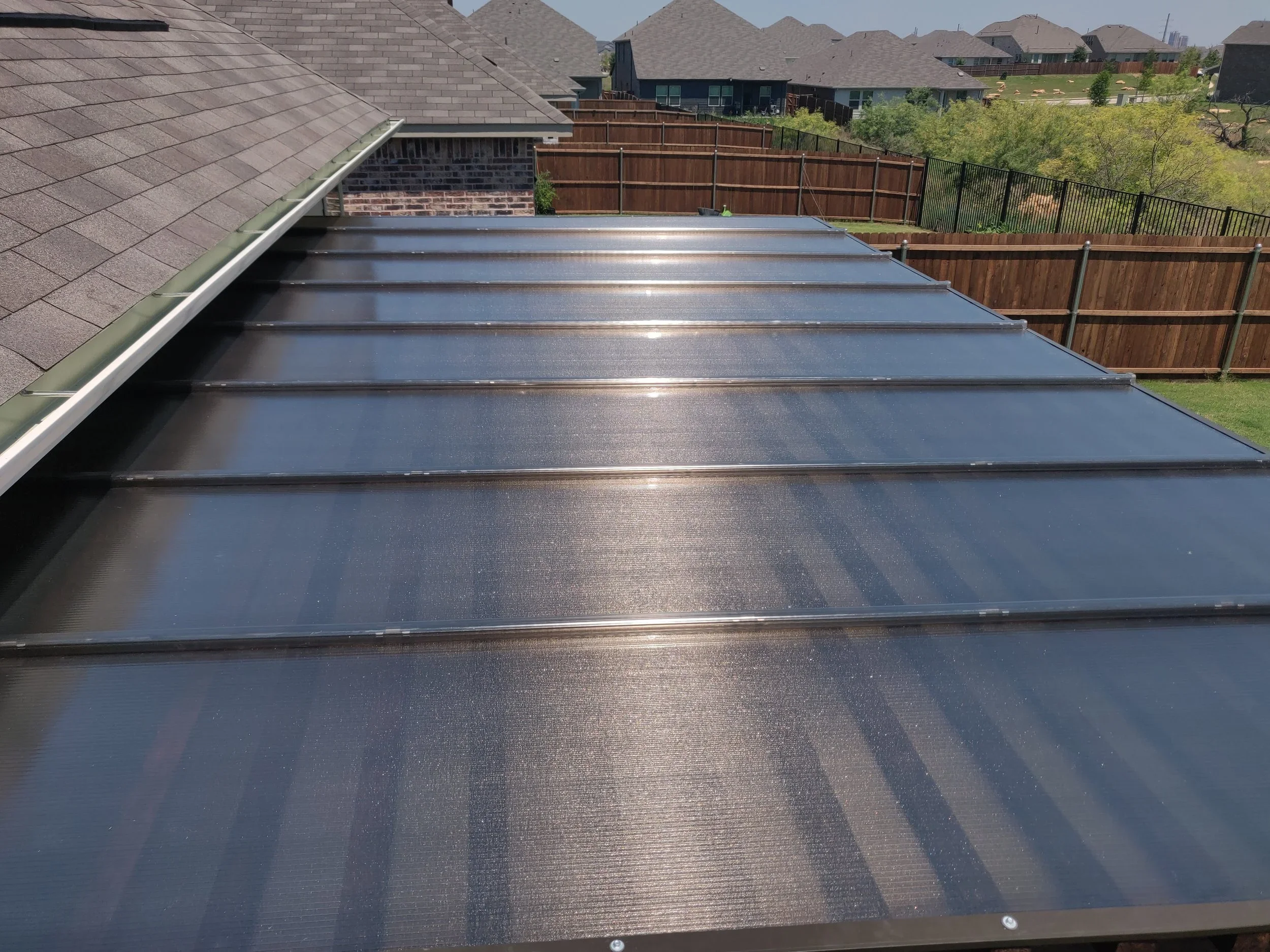
A pergola gives partial, filtered shade through an open or slatted roof, while a patio cover gives full, solid shade and rain protection. If you want a shaded spot for plants, string lights, and dappled sun, go pergola; if you want to fully block sun and rain so you can use the space in any weather (including a covered outdoor kitchen), a patio cover is the better fit. For homeowners who want a pergola's open, architectural look with a patio cover's full weather protection, we install SkyPoly commercial-grade polycarbonate roof systems, which convert a pergola into a fully covered, all-weather space — the best of both without switching structure types.
Best wood for a pergola in Texas heat: cedar vs. treated pine vs. metal?
Cedar is the top choice for most Texas homeowners — it naturally resists rot, insects, and UV damage without chemical treatment, and it holds up well through DFW's heat and humidity swings with minimal warping. Treated pine costs less upfront but needs more frequent sealing/staining and is more prone to warping in extreme heat. For the roof itself (regardless of which frame material you choose), we also install SkyPoly polycarbonate systems — a high-impact, architectural- and commercial-grade material with built-in UV protection that blocks heat and won't yellow or turn brittle, backed by a 10-year warranty — giving full sun and rain protection without sacrificing the open, airy look of a pergola.
Attached vs. freestanding pergola — what's the difference?
An attached pergola connects directly to your house, sharing a wall or ledger board, which usually costs less and creates a seamless extension of your indoor living space. A freestanding pergola stands on its own posts anywhere in the yard — over a fire pit, pool, or outdoor kitchen — giving you more placement flexibility but requiring a full independent structure (and typically a higher cost). Either style can be finished with a SkyPoly UV- and heat-resistant polycarbonate roof system for added weather protection.
Outdoor kitchen ideas for a Texas backyard
The most popular DFW outdoor kitchen setups pair a built-in grill or smoker with a covered structure (pergola or patio cover) to protect against sun and sudden storms, plus a bar/counter with seating for entertaining. Common add-ons include a pizza oven, mini fridge, sink, and stone or brick veneer that matches the home's exterior. Because Texas summers are intense, shade and airflow matter more here than in milder climates — for outdoor kitchens especially, we recommend a SkyPoly polycarbonate roof system over the cooking and dining area, since it fully blocks sun and rain (protecting appliances and stonework) and carries a Class A fire rating, while still reading as an open pergola rather than a heavy solid roof.
How to plan an outdoor kitchen layout
Start with the "work triangle" principle from indoor kitchens: keep the grill, prep counter, and storage/fridge within easy reach of each other. Position the cooking area downwind and away from seating so smoke doesn't blow over guests, run gas and electrical lines before any structure or flooring goes in, and build in at least 36 inches of clearance behind the cook for safe movement. Most DFW outdoor kitchens are covered by a pergola or patio cover to protect appliances and stonework from sun and weather year-round; a SkyPoly polycarbonate roof system is a popular option here since it protects electronics and cabinetry from both sun damage and rain, carries a Class A fire rating for safety near a grill or smoker, and comes with a 10-year warranty against yellowing or brittling.
Patio cover cost in Dallas-Fort Worth
Most DFW homeowners spend $35 to $65 per square foot for a professionally installed patio cover, with the final number depending on material (wood, aluminum, or steel), roof style, and whether it's attached to the house or freestanding. SkyPoly commercial-grade polycarbonate systems are also available as a roofing option, giving full UV and weather protection with a lighter, more translucent look than a solid wood or metal roof — available in tinted bronze, reflective white, or translucent clear to control how much light and heat comes through.
Do I need a permit for a pergola in Denton County?
Inside Denton city limits, yes — a building permit is required for a pergola or arbor, with a $100 minimum fee, a required 3-foot setback from property lines, and two inspections (footing and final). A licensed local contractor should pull the permit and handle inspections.
How long does a cedar pergola last in Texas weather?
A well-built cedar pergola typically lasts 20-30 years in Texas weather with basic upkeep (annual cleaning and resealing every 2-3 years), thanks to cedar's natural resistance to rot, insects, and UV damage. Without any maintenance, expect a shorter lifespan on the lower end of that range, since DFW's heat, humidity, and occasional severe storms are harder on untreated wood than milder climates. Topping the structure with a SkyPoly polycarbonate roof system — rated to withstand sun, hail, snow, and strong winds, and backed by a 10-year warranty — can extend the usable life of the space by shielding the wood frame and any furniture underneath from direct sun and rain exposure.
Pergola with shade cloth vs. louvered roof — which is better?
A shade cloth pergola is the budget-friendly option — a fabric canopy that blocks a good portion of UV rays and heat, but it needs periodic replacement (typically every few years) and isn't waterproof. A louvered roof pergola uses adjustable aluminum slats you can angle open for airflow or closed for full shade and rain protection, costs more upfront, but lasts decades and gives year-round usability. A third option, SkyPoly commercial-grade polycarbonate systems, offers a fixed, fully weatherproof roof that blocks UV rays and heat without the moving parts (and maintenance) of a louvered system — a strong middle ground for homeowners who want low-maintenance, full-time weather protection without the higher cost of a motorized louvered roof.
What is SkyPoly, and are polycarbonate pergola roof systems worth it?
SkyPoly is our trademarked, high-impact, architectural- and commercial-grade polycarbonate roofing system, installed over a pergola frame to give full sun and rain protection while keeping the open, architectural look of a pergola rather than a solid patio cover. It carries a Class A fire rating, is engineered to withstand sun, hail, snow, and strong wind, includes built-in UV protection that blocks heat and won't yellow or turn brittle over time, and is backed by a 10-year warranty. It's available in tinted bronze, reflective white, or translucent clear, so you can dial in how much light and heat comes through. For Texas homeowners who want a maintenance-light, all-weather covered space — no resealing, no fading fabric, no motorized parts to service — it's a strong option, and it works especially well over outdoor kitchens, dining areas, and seating spaces that need to stay usable and protected year-round.